
Somewhere between Hollywood red carpets and late-night TikTok rabbit holes, face tape has snuck its way back into the beauty spotlight. Equal parts genius, unhinged, and oddly thrilling to play with, it’s a way to temporarily contour by way of tiny adhesives that pull your skin into a “snatched” alternate reality.
Welcome to the wonderfully bizarre world of face tape, where vanity meets arts and crafts, and the results are surprisingly fun to mess with.
Face tape, often referred to as face lifting tape, is a discreet adhesive designed to temporarily lift and tighten the skin. It often involves elastic bands attached to two adhesive pieces. It’s a non-invasive method that provides instant results, making it a popular choice for those seeking a quick beauty fix without the need for surgery.
Sure, you could go the route of music artist Doechii and wear face tape as a statement piece, but you’re most likely going to opt to strategically place it on the skin where it remains hidden under makeup or hair to pull and tighten areas such as the jawline, cheekbones, and neck.

SOURCE: @iamdoechii_/TikTok; Kevin Mazur/Getty
Why face tape?
Well, one of the most significant advantages is the immediate effect. Users can see a noticeable lift immediately if you place it correctly.
Unlike surgical procedures, face tape is non-invasive. With various shapes and sizes available, users can tailor the application to suit their unique facial structure and desired results. It’s also budget-friendly, allowing users to achieve their beauty goals without breaking the bank.
Applying face tape effectively requires some practice, but once mastered, it can become a regular part of your beauty routine or just used for the occasional photoshoot.
Let’s start:
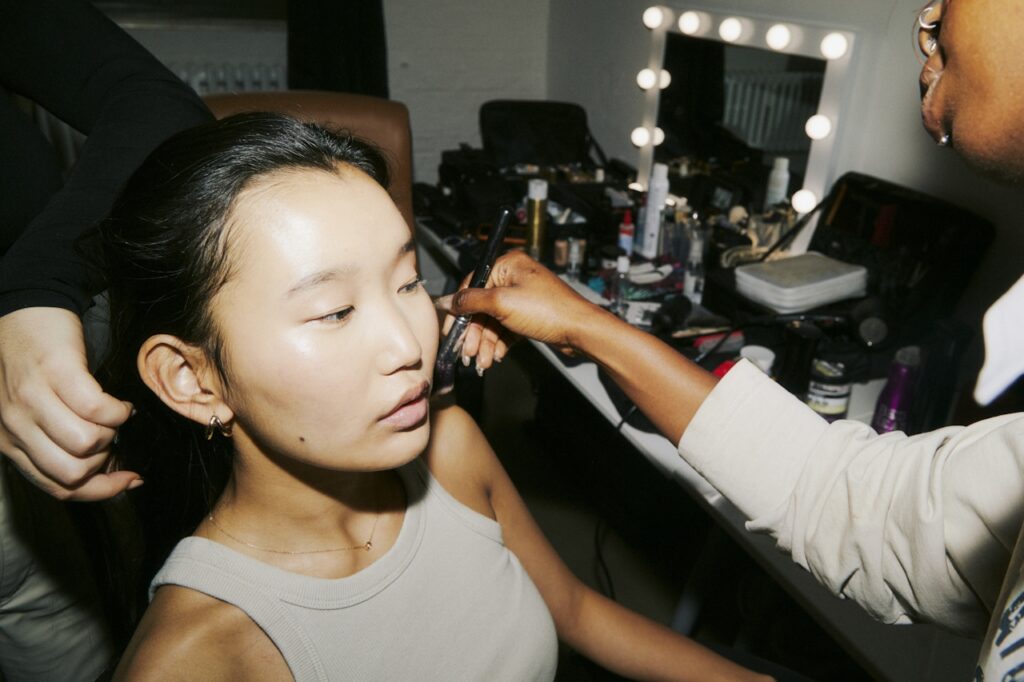
For product developers, the face tape trend opens up exciting opportunities for innovation. There’s potential to develop new products that enhance the effectiveness and ease of use of face tape, perhaps incorporating skincare benefits or improving adhesive technology.
For the curious beauty enthusiast, it’s an interesting tool for those who want a sharper canvas or anyone curious about what a little lift might look like without committing to a procedure. And honestly? Part of the charm is the sheer fun of it. There’s something oddly exhilarating about sticking on a few tiny adhesives and watching your face shift in real time, like a glam version of arts and crafts.
Before you go full DIY facelift, a quick PSA: face tape might be fun, but your skin doesn’t always share your sense of adventure. Most face tapes are made from skin-safe materials and are designed to be gentle on the skin. However, adhesives can be irritating especially if you have sensitive skin. It’s imperative to patch-test first and avoid using tape on broken or inflamed areas. If you feel burning, itching, or notice redness that doesn’t fade, take the tape off right away. Beauty experiments are great, but not at the expense of your skin barrier.